PHƯƠNG ĐÌNH PAVILION – VĂN LAKE
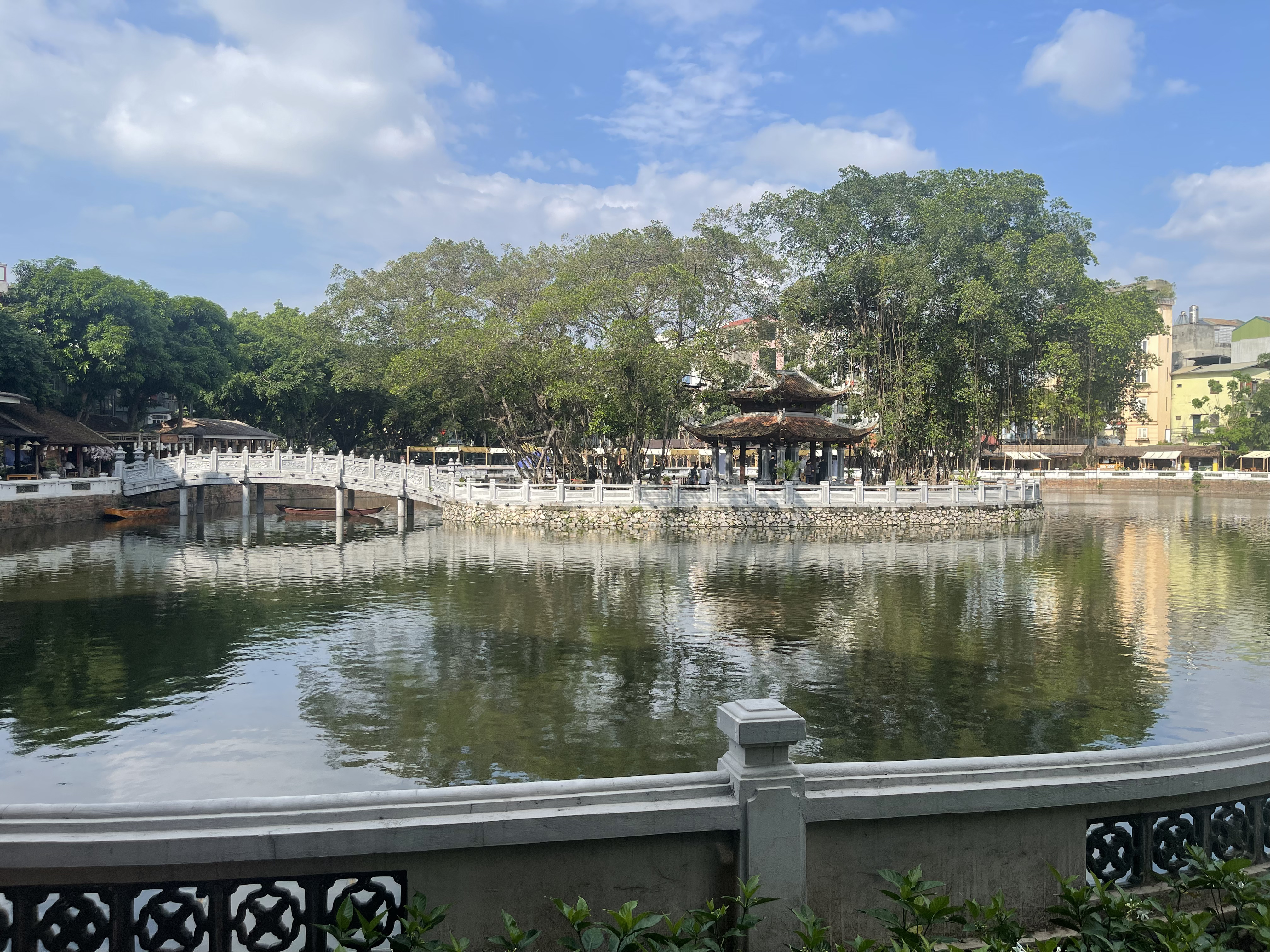
Located in front of the Văn Miếu - Quốc Tử Giám complex, Hồ Văn (the Văn Lake) has long been an integral part of the cultural landscape of ancient Thăng Long. Although its area has been reduced over time due to urban development and city planning, covering approximately 12,297 square meters today, the lake still retains its serene beauty and rich historical significance.
At the center of the lake lies Kim Châu Islet, which was once home to Phán Thủy Hall, a pavilion where Confucian scholars gathered to compose, discuss, and critique poetry and literature. Although the original structure no longer exists, a stone stele erected in 1865, during the reign of Emperor Tự Đức, remains on the islet. Discovered during restoration works at Văn Miếu and the dredging of Văn Lake, the inscription was written by Lê Hữu Thanh, a Hoàng Giáp laureate of the 1851 royal examination. It records the restoration and improvement of Văn Lake, the construction of the Doctors’ Stelae pavilions, and the building of a pavilion on Kim Châu Islet in 1865, named Văn Hồ Đình.
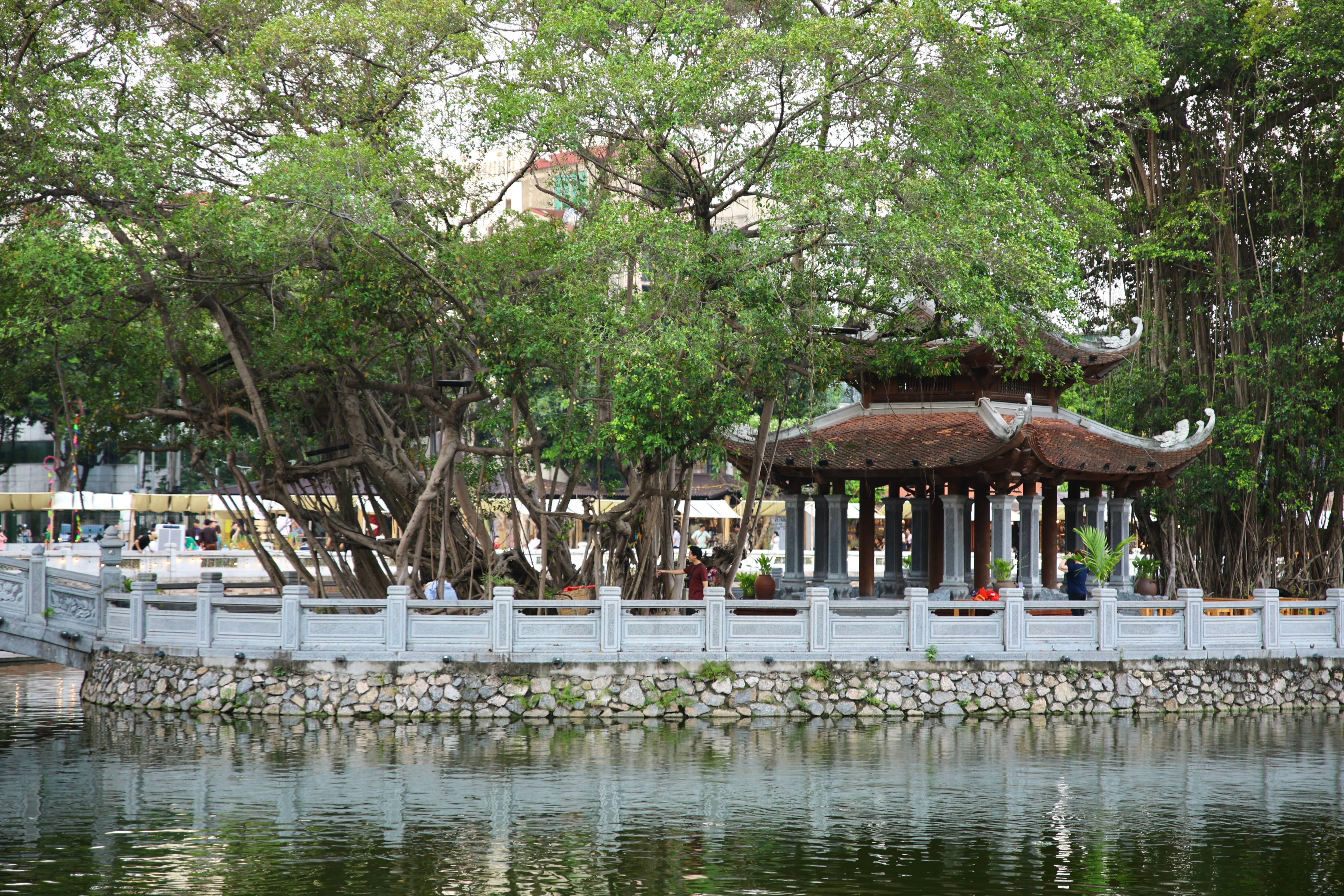
In 2017, the Hanoi People's Committee approved the reconstruction of Phương Đình Pavilion on Kim Châu Islet. After several years of work, the pavilion was completed in 2022, bringing a renewed appearance to Văn Lake while reviving an important historical space associated with the site.
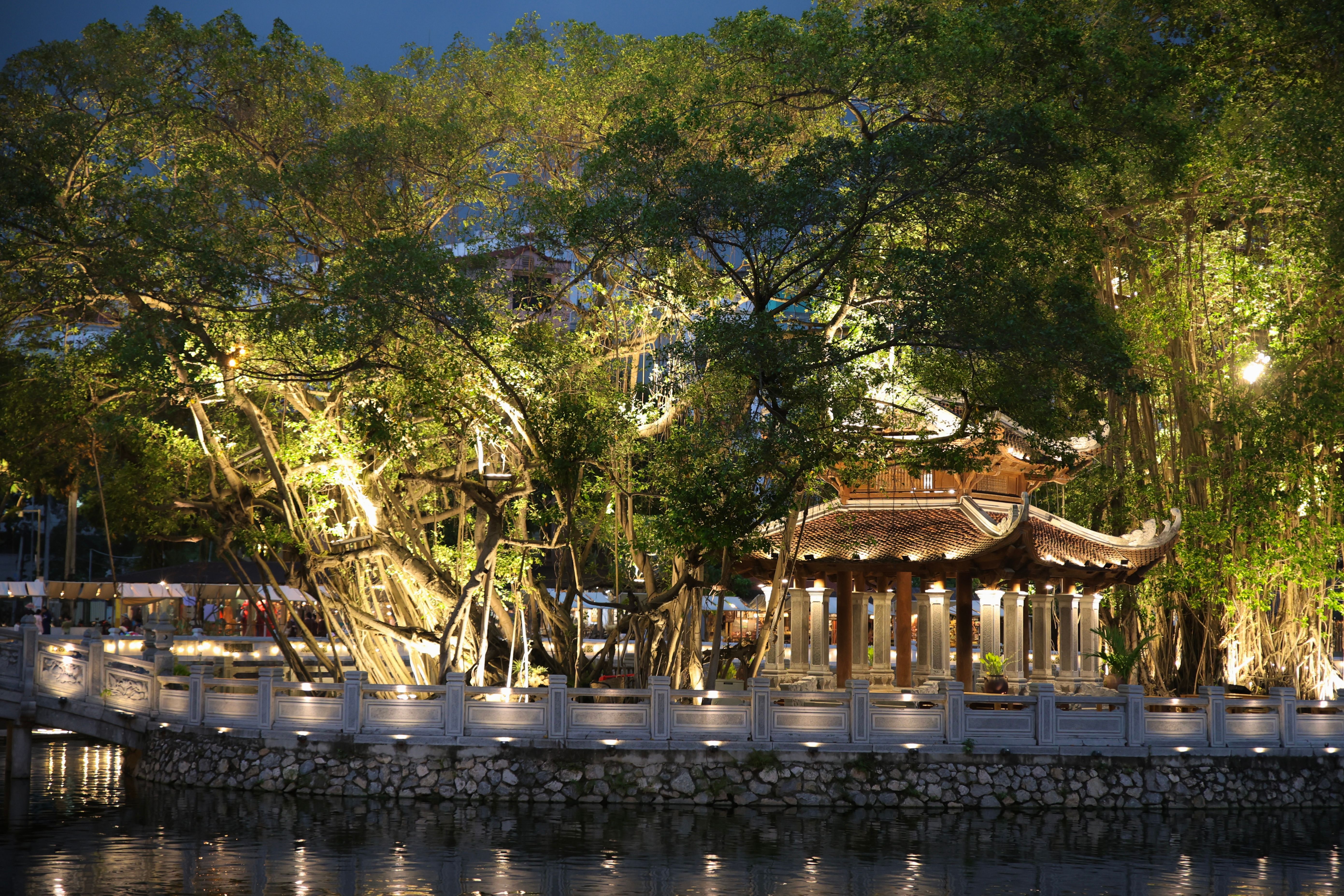
Phương Đình is the only architectural structure on Kim Châu Islet and occupies its central position along the main sacred axis of the Văn Miếu - Quốc Tử Giám complex. The pavilion faces the same direction as the principal buildings within the monument. Designed in the traditional Vietnamese style, it features a two-tiered structure with eight roofs, elevated on a raised platform. Its wooden framework consists of sixteen timber columns, including both principal and secondary supporting columns.
The significance of Phương Đình extends far beyond its architectural form. The pavilion helps recreate the scholarly atmosphere once associated with Hồ Văn, recalling the literary gatherings and intellectual exchanges of Thăng Long's Confucian scholars. It serves as a reminder of Vietnam’s long-standing traditions of learning, respect for teachers, and the cultivation of talent.
Today, Phương Đình is also a venue for cultural activities, educational programs, exhibitions, and heritage experiences, helping visitors engage more closely with the history and values of Văn Miếu - Quốc Tử Giám.
Amid the bustling life of modern Hanoi, Phương Đình Pavilion stands as a peaceful retreat. It not only connects Hồ Văn with the main sanctuary area of Văn Miếu - Quốc Tử Giám but also bridges the past and the present, linking heritage with contemporary life. Through its presence, Phương Đình enriches the cultural, architectural, and landscape values of Hồ Văn, an important component of the Special National Relic of Văn Miếu - Quốc Tử Giám.