
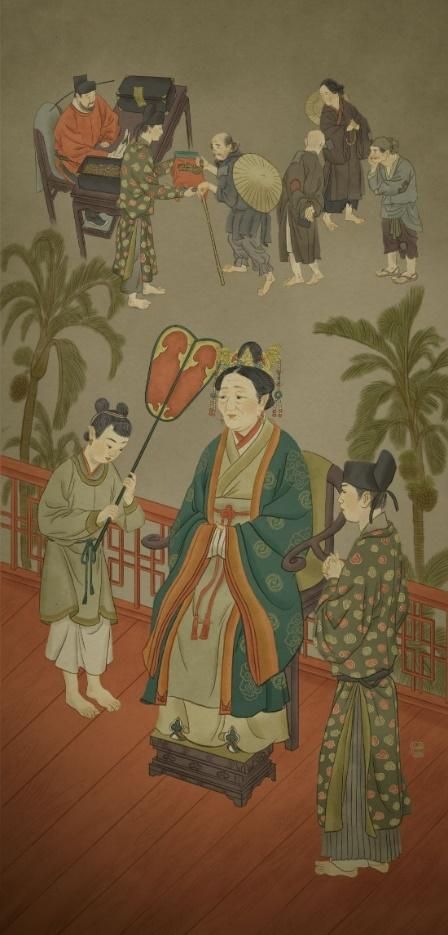
IMPERIAL CONSORT Ỷ LAN – A SYMBOL OF THE INTELLECT AND STRENGTH OF VIETNAMESE WOMEN
In Vietnamese history, Nguyên phi Ỷ Lan (Imperial Consort Ỷ Lan) stands as a remarkable symbol of the intellect and strength of Vietnamese women. From a young woman of humble rural origins, she rose to become an imperial consort of Emperor Lý Thánh Tông and later held the title of Empress Dowager Linh Nhân. On two occasions, she assumed responsibility for governing the country on behalf of the emperor.
09:00, 20.10.2026
Văn Miếu - Quốc Tử Giám

In Vietnamese history, Nguyên phi Ỷ Lan (Imperial Consort Ỷ Lan) stands as a remarkable symbol of the intellect and strength of Vietnamese women. From a young woman of humble rural origins, she rose to become an imperial consort of Emperor Lý Thánh Tông and later held the title of Empress Dowager Linh Nhân. On two occasions, she assumed responsibility for governing the country on behalf of the emperor.
On the occasion of Vietnamese Women’s Day (20 October), the story of her life and achievements provides an opportunity to honour the significant contributions of women to Vietnam’s history, culture and national development.
Originally from the Lê family, Ỷ Lan was born in Thổ Lỗi, a historical locality later renamed Siêu Loại, in the area of present-day Gia Lâm, Hà Nội. According to folk tradition, when Emperor Lý Thánh Tông passed through Thổ Lỗi, he noticed a young woman standing calmly beside an orchid tree while crowds gathered to watch the imperial procession. Impressed by her beauty and the way she responded to his questions, the emperor brought her to the imperial court and bestowed upon her the name Ỷ Lan.
From her humble beginnings to her life in the imperial palace, Ỷ Lan gradually distinguished herself through her intelligence, eagerness to learn and profound understanding of state affairs. Her most notable achievements lay in her political abilities, demonstrated on the two occasions when she assumed responsibility for the administration of the country.
In 1069, when Emperor Lý Thánh Tông personally led a military campaign against Champa, Imperial Consort Ỷ Lan was entrusted with overseeing state affairs in the capital. During the emperor’s absence, she managed affairs of the imperial court and helped maintain stability throughout the country.
According to the Complete Annals of Đại Việt (Đại Việt sử ký toàn thư), the emperor had initially been unable to achieve victory in his campaign against Champa. While returning with his army, he reached Cư Liên and heard that Ỷ Lan had managed domestic affairs effectively, winning the support of the people and maintaining stability throughout the realm. Her devotion to Buddhism had also earned her the popular name “Lady Quan Âm”. The emperor is recorded as having expressed his admiration for her achievements, questioning how he, as a man, could return without accomplishing anything when the Imperial Consort had governed so successfully. This account reflects the emperor’s recognition of Ỷ Lan’s ability to govern and highlights her important role in the political life of the Lý dynasty.
In 1072, Emperor Lý Thánh Tông passed away, and the young Crown Prince Càn Đức ascended the throne as Emperor Lý Nhân Tông. Following political upheavals within the imperial court, Ỷ Lan was granted the title of Empress Dowager Linh Nhân and assumed responsibilities as regent, supporting the young emperor with the assistance of senior court officials. During the resistance against the Song invasion (1075–1077), Empress Dowager Linh Nhân undertook significant responsibilities as regent at a time when Đại Việt faced a major national challenge. In this role, she helped maintain stability at the imperial court and ensure that the home front continued to support the war effort.
The victory of 1077 was a collective achievement of the people and armed forces of Đại Việt. It also reflected her contribution to the administration of state affairs during wartime, demonstrating her political resolve and ability to govern amid national upheaval. During this period, the Lý dynasty also placed considerable emphasis on education and the selection of talented individuals to serve the country. In 1075, the imperial court held the first Confucian examination. Lê Văn Thịnh achieved the highest result and was subsequently appointed to assist with the emperor’s education. In 1076, Quốc Tử Giám was established, laying the foundations for the development of Confucian education and the imperial examination system in Đại Việt. These developments took place during a period when Ỷ Lan held an important position in the administration of the country. In that capacity, she demonstrated intelligence and foresight, not only by helping maintain political stability but also through her concern for education and the cultivation of talent, recognising their importance in strengthening the nation and ensuring the long-term prosperity of the dynasty.
Through her two periods of responsibility for state affairs, Ỷ Lan demonstrated the intellect and determination of a woman capable of participating in matters of national importance. Her achievements have made her an enduring example of the intellectual strength of Vietnamese women throughout history.
Beyond her political abilities, Imperial Consort Ỷ Lan was also known for her concern for the welfare of the people. According to the Complete Annals of Đại Việt, in 1103 she ordered funds from the imperial treasury to be used to redeem girls from impoverished families who had been sold. In 1117, she advised Emperor Lý Nhân Tông to introduce strict regulations to prevent the theft and unlawful slaughter of buffaloes and cattle, which were essential to agricultural production. These actions reflected her concern for people facing hardship and for the livelihoods and well-being of the population.
In addition to her political influence, Ỷ Lan made important contributions to the cultural and spiritual life of Đại Việt society. A devout Buddhist, she supported the construction of Buddhist temples and pagodas and the development of Buddhism. The Complete Annals of Đại Việt records that the Empress Dowager had more than one hundred Buddhist temples built over time. Her discussions with Buddhist monks, recorded in Thiền uyển tập anh (A Collection of Outstanding Figures of the Zen Tradition), also reveal her understanding of and interest in the religious and philosophical thought of her time.
Today, the legacy of Imperial Consort Ỷ Lan lives on in historical chronicles, legends, folk tales and places of worship. In many communities, she is affectionately revered as “Bà Tấm” (Lady Tấm). The Temple of Imperial Consort Ỷ Lan and Bà Tấm Pagoda in Gia Lâm, Hà Nội, are among the notable heritage sites preserving the memory of her life and contributions.
Nearly a thousand years later, Imperial Consort Ỷ Lan remains a remarkable figure in Vietnamese history. Her life and achievements demonstrate not only the intellect and determination of women in a monarchical society but also a profound sense of responsibility towards the country and its people.
On the occasion of Vietnamese Women’s Day (20 October), her story continues to remind us of and honour the contributions of women to the creation, preservation and development of Vietnam’s cultural and historical heritage. It also reflects the enduring place of Imperial Consort Ỷ Lan in Vietnamese cultural memory.
TL: LH