
.JPG)
.JPG)
.JPG)
.JPG)
.JPG)
.JPG)
Scientific Conference on Phạm Công Trứ (1600–1675): The Man and His Legacy
08:00 - 18:00, 30.10.2025
Văn Miếu - Quốc Tử Giám

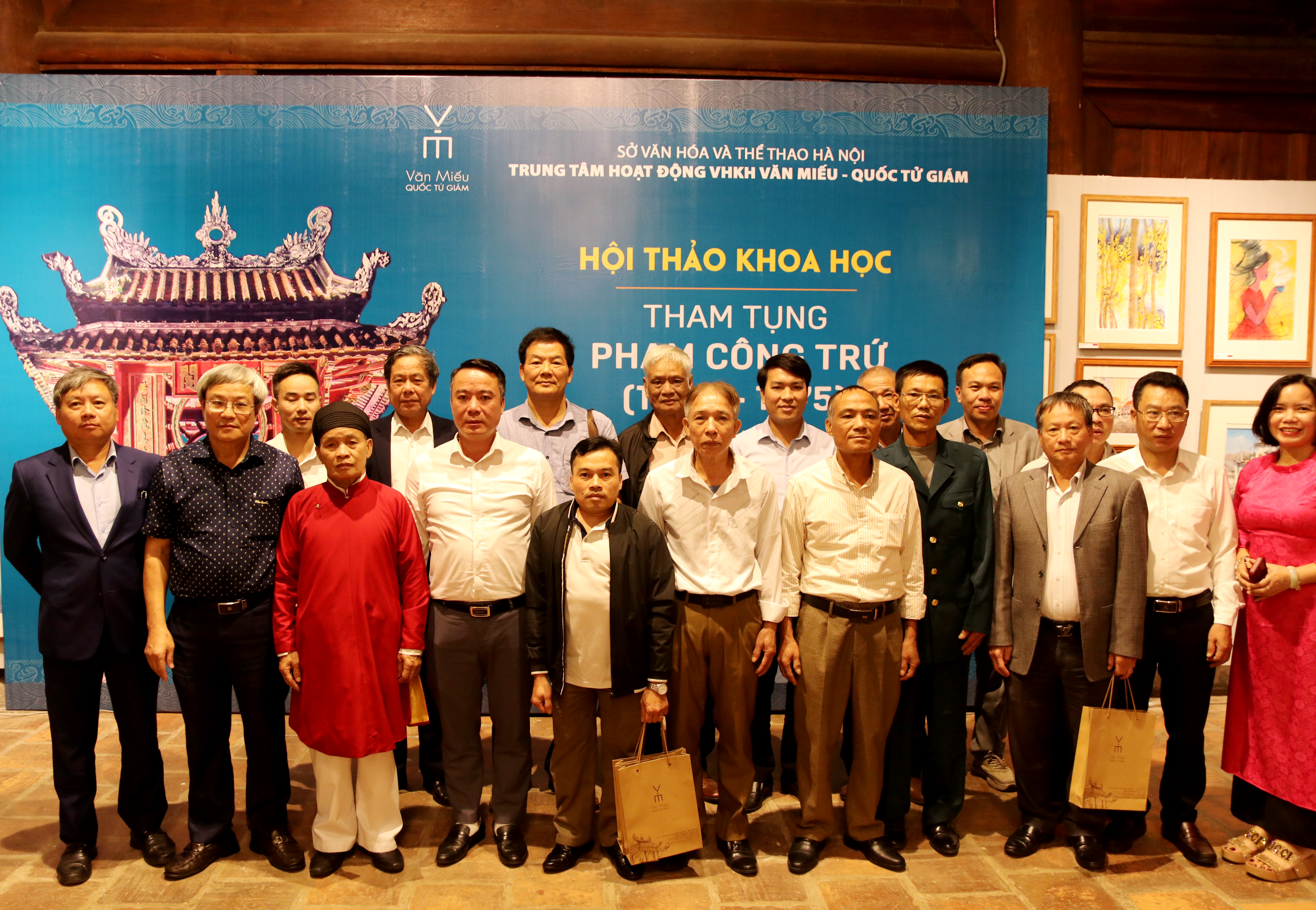
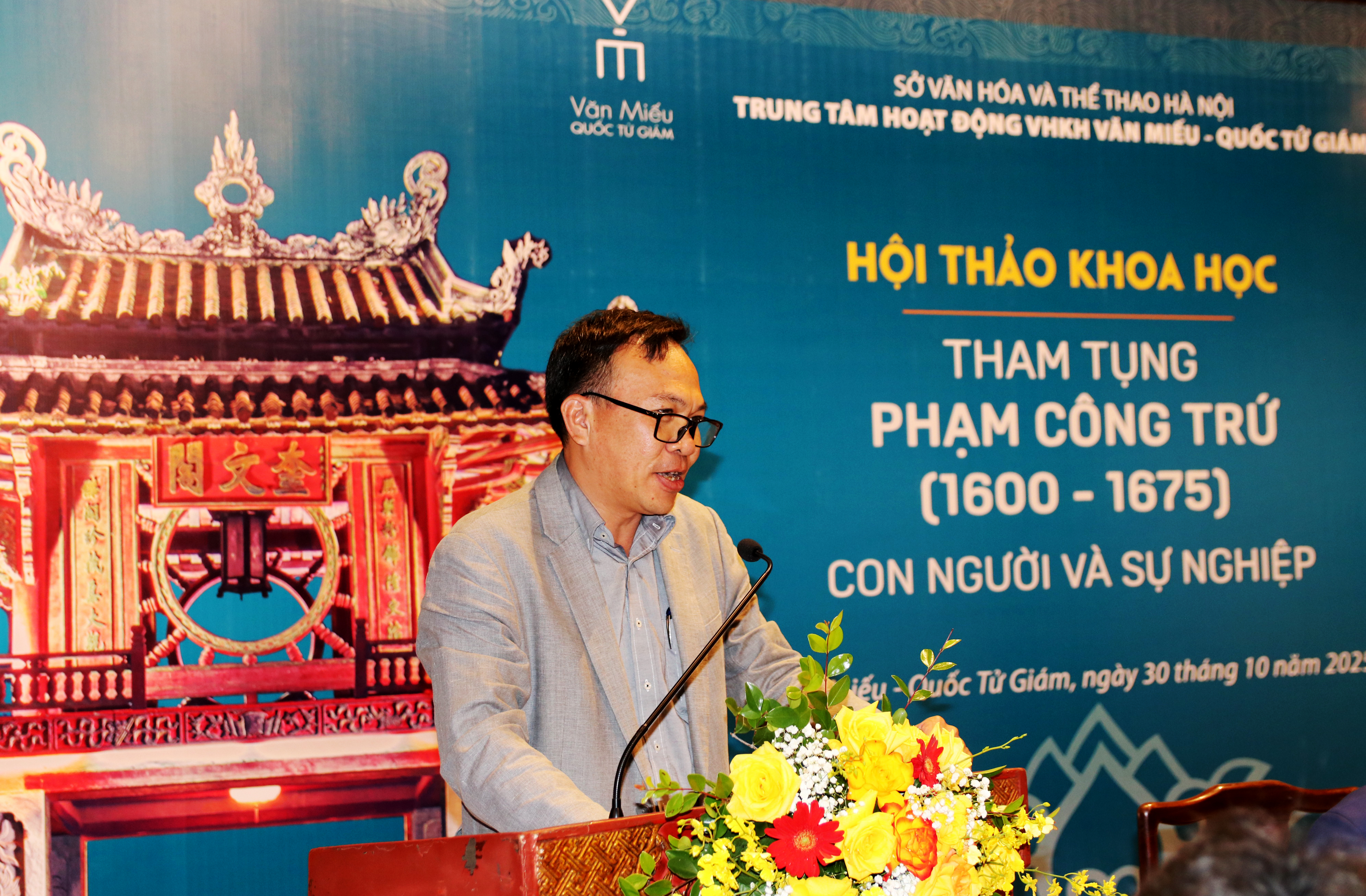
On the morning of October 30, on the occasion of the 350th anniversary of the passing of Tham Tụng Phạm Công Trứ (1675–2025) and in the lead-up to the 955th anniversary of the founding of Văn Miếu (1070–2025), the Văn Miếu – Quốc Tử Giám Center for Cultural and Scientific Activities organized the scientific conference "Tham Tụng Phạm Công Trứ (1600–1675): The Man and His Legacy."
Phạm Công Trứ was born in Liêu Xuyên village, Đường Hào district, Hải Dương prefecture (present-day Nguyễn Văn Linh commune, Hưng Yên Province). In 1625, he passed the Sĩ Vọng examination, and in the Mậu Thìn year (1628), the 10th year of the Vĩnh Tộ reign, he passed the doctoral examinations. Over more than 40 years in public service, Phạm Công Trứ served five Lê kings and two Trịnh lords, holding numerous important positions including Tham Tụng, Minister of Personnel, Minister of Rites, and Grand Scholar of Đông Các, among others, contributing to the consolidation of court order and the reform of legislation. His talent and character were held in the highest regard by the Lê kings and Trịnh lords. To this day, his name remains inscribed on a Doctoral Stele at the Văn Miếu – Quốc Tử Giám heritage site.
The conference received 21 academic papers from scholars and delegates representing the Institute of History, the Institute of Hán Nôm Studies, the Institute of Literature, the Thăng Long Cultural Research Institute, the Trần Nhân Tông Institute, the University of Social Sciences and Humanities (Đại Học Quốc Gia Hà Nội), Phương Đông University, the Hưng Yên Provincial Museum, Nhà Xuất Bản Giáo Dục Việt Nam, the Vietnam Ethnology and Anthropology Association, and the Văn Miếu – Quốc Tử Giám Center for Cultural and Scientific Activities. The papers focused on two main themes:
- The homeland and the Phạm Công Trứ family lineage.
- Tham Tụng Phạm Công Trứ (1600–1675): The man and his legacy.
All papers affirmed that Phạm Công Trứ was a pillar of the state, making significant contributions across many fields. Notably, with regard to Văn Miếu – Quốc Tử Giám in the 1660s, he was entrusted with its oversight and subsequently oversaw the restoration of the Thái Học hall, transforming it into a more dignified space, after which "the spirit of the Confucian scholarly community was greatly uplifted."
The conference served as an opportunity to learn about the distinguished figure Phạm Công Trứ (1600–1675), a celebrated mandarin of the Lê Trung Hưng period who left a profound mark on Vietnamese politics, economics, education, and historiography, thereby contributing to the recognition and celebration of his enduring contributions to his homeland and country.